Great Review

In the Words of Women got a great review from the much-respected history blog Two Nerdy History Girls on March 4. Thanks to Susan Holloway Scott and Loretta Chase for spreading the word about the book on their blog and also for mentioning it on Facebook and Twitter. We’re pleased about this recognition and delighted to see an uptick in readership of ITWOW as a result.

posted March 13th, 2012 by Janet, Comments Off on Great Review, CATEGORIES: Reviews of ITWOW

“She could neither read nor write … “

In 1781, Elizabeth, later known as Mum Bett or Mumbet, was a slave in the household of Colonel John Ashley of Sheffield, Massachusetts. When the mistress of the house, in a fit of pique, raised a hot kitchen shovel to strike another slave, Elizabeth took the blow on her arm. Refusing to put up with such behavior, Elizabeth left the household and refused to come back. When her master went to
court to regain possession of his slave, Elizabeth fled to the law office of Theodore Sedgwick and asked him to represent her and another slave. Sedgwick and his law partner agreed to do so and secured their freedom, arguing that the bill of rights in the Massachusetts Constitution of 1780 applied to them. Elizabeth, taking the name of Freeman, became a member of the Sedgwick household where she was affectionately called “Mumbet.” When she died, she was buried in the Sedgwick plot in the Stockbridge, Massachusetts cemetery, where you can see her grave with the tombstone the family erected. The inscription on it reads:

ELIZABETH FREEMAN
known by the name of
MUMBET
died Dec. 28 1829.
Her supposed age
was 85 Years.

She was born a slave and
remained a slave for nearly
thirty years. She could nei-
ther read nor write yet in
her own sphere she had no
superior nor equal. She nei-
ther wasted time nor property.
She never violated a trust, nor
failed to perform a duty.
In every situation of domes-
tic trial, she was the most effi-
cient helper, and the tenderest
friend. Good mother Fare well.

This excerpt is from In the Words of Women, Chapter 8, pages 219-20. Mumbet’s portrait, a watercolor on ivory by Susan Anne Livingston Ridley Sedgwick, is at the Massachusetts Historical Society in Boston.

posted March 12th, 2012 by Janet, Comments Off on “She could neither read nor write … “, CATEGORIES: Mumbet, Slaves/slavery

” … I crave to see a synagogue … “

Rebecca Samuels and her husband Hyman were Orthodox Jewish immigrants from Germany living in Petersburg, Virginia. Writing in Yiddish to her parents in 1791, Rebecca expressed her concern that living in an area where there were few Jews she and her family were in danger of losing their traditions and beliefs. She explained that they planned to move to Charleston, South Carolina, where there was a larger Jewish community.
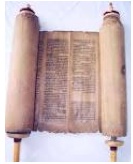
Dear parents, I know quite well you will not want me to bring up my children like Gentiles. Here they cannot become anything else. Jewishness is pushed aside here. There are here ten or twelve Jews, and they are not worthy of being called Jews. We have a shohet [slaughterer of animals] here who goes to market and buys terefah [nonkosher] meat and then brings it home. On Rosh Hashanah and on Yom Kippur the people worshiped here without one sefer torah [Scroll of the Law], and not one of them wore the tallit [a prayer shawl] or the arba kanfot [small set of fringes worn on the body], except Hyman and my Sammy’s godfather. …

You can believe me that I crave to see a synagogue to which I can go. The way we live now is no life at all. We do not know what the Sabbath and the holidays are. On the Sabbath all the Jewish shops are open, and they do business on that day as they do throughout the whole week. But ours we do not allow to open. With us there is still some Sabbath. You must believe me that in our house we all live as Jews as much as we can. …

For the sake of a livelihood we do not have to leave here. Nor do we have to leave because of debts. I believe ever since Hyman has grown up that he has not had it so good. You cannot know what a wonderful country this is for the common man. One can live here peacefully. Hyman made a clock that goes very accurately, just like the one in the Buchenstrasse in Hamburg. Now you can imagine what honors Hyman has been getting here. In all Virginia there is no clock [like this one]. …

When Judah [a relative] comes here, he can become a watchmaker and a goldsmith, if he so desires. Here it is not like Germany where a watchmaker is not permitted to sell silverware. They do not know otherwise here. They expect a watchmaker to be a silversmith here. Hyman has more to do in making silverware than with watchmaking. He has a journeyman, a silversmith, a very good artisan, and he, Hyman, takes care of the watches. This work is well paid here, but in Charleston, it pays even better.

All the people who hear that we are leaving give us their blessings. They say that it is sinful that such blessed children should be brought up here in Petersburg. My children cannot learn anything here, nothing Jewish, nothing of general culture. My Schoene [her daughter], God bless her, is already three years old; I think it is time that she should learn something, and she has a good head to learn. I have taught her the bedtime prayers and grace after meals in just two lessons. I believe that no one among the Jews here can do as well as she. And my Sammy [born 1790], God bless him, is already beginning to talk.

I could write more. However, I do not have any more paper.

I remain, your devoted daughter and servant, Rebecca, the wife of Hayyim, the son of Samuel the Levite, I send my family … and all my friends, my regards.

The excerpt is from In the Words of Women. Chapter 8. page 236.

posted March 8th, 2012 by Janet, Comments Off on ” … I crave to see a synagogue … “, CATEGORIES: Children, Daily life, Religion

“a history of my life”

Lucy Flucker Knox, the wife of American general Henry Knox, had given up a great deal for him. Her loyalist parents disapproved of her marriage and fled to England at the start of the war; she was never to see them again. Married only three years when she wrote this letter in 1777, she described her day in response to a request from her husband, asking for “a history of my life.”

My dearest friend
In the first place, I rise about eight in the morning so late an hour you will say but the day after that is full long for a person in my condition. I presently after sit down to my breakfast, where a page in my book and a dish of tea, employ me alternately for about an hour. When after seeing that family matters go on right, I repair to my work … for the rest of the forenoon. At two o’clock I usually take my solitary dinner where I reflect upon my past happiness. … I place my little Lucy [their daughter] by me at table, but the more engaging her little actions are so much the more do I regret the absence of her father who would take such delight in them. In the afternoon I commonly take my chaise and ride into the country or go to drink tea with one of my few friends. … then with any … I often spend the evening, but when I return home

she continues

how shall I describe my feelings to find myself entirely alone, to reflect that the only friend I have in the world is such an immense distance from me to think that he may be sick and I cannot assist him; ah poor me my heart is ready to burst. … When I seriously reflect that I have lost my father, mother, Brother, and sisters, entirely lost them I am half distracted. True I chearfully renounced them for one far dearer to me than all of them—but I am totally deprived of him—I have not seen him for almost six months, and he writes me without pointing at any method by which I may ever expect to see him again—tis hard my Harry indeed it is. I love you with the tenderest the purest affection. I would undergo any hardship to be near you and you will not lett me. …

The first excerpt is from from the Gilder Lehrman Collection 02437, Letter Boston 23 August 1777; the second part of the letter is from In the Words of Women, Chapter 4, page 111.

posted March 5th, 2012 by Janet, Comments Off on “a history of my life”, CATEGORIES: Daily life, Marriage

A Widow’s Pension

John Hooghlandt served nine months in the 1st New Jersey Regiment during the Revolutionary War. He was discharged in 1778 and subsequently died. His wife Anne applied for a widow’s pension ca. 1780 and filed this sampler as proof of her relationship to John. Her application was approved, and she received $30 per month. Good thing she was handy with the needle.

The sampler appears in Records of the Department of Veterans Affairs. Archival Research Catalog ID: 1656128

posted March 1st, 2012 by Janet, Comments Off on A Widow’s Pension, CATEGORIES: Marriage, Military Service

previous page

   Copyright © 2026 In the Words of Women.