The United States in 1784

“… never to hold disputes with my husband”

Would women today resolve, as Elizabeth “Betsy” Foote Washington did when she married her cousin Lund in 1784, “never to hold disputes with my husband”?

One of my first resolutions I made after marriage was never to hold disputes with my husband—never to contend with him in my opinion of things—but if ever we differed in opinions not to insist on mine being right, and his wrong—which is too much the custom of my sex—they cannot bear to be thought in the wrong—which is the cause why there is so much contention in the married state—and the Lordly Sex they can never be in the wrong in their own opinion—and cannot give up to a woman but I blame my sex most. It is their business to give up to their husbands—our mother [Eve] even when she transgressed was told her husband [Adam] should rule over her—how dare any of her daughters to dispute the point. … I think a woman may keep up the dignity of a wife and mistress of a family without ever disputing with her husband.

This excerpt is from In the Words of Women, Chapter 7, pages 198-199.

posted May 31st, 2012 by Janet, Comments Off on “… never to hold disputes with my husband”, CATEGORIES: Marriage, Washington, Lund

Queen Victoria’s Journals (!!??)

After thinking long and hard, I could come up with no connection to this blog that would allow me to write a post about Queen Victoria’s journals (certainly there’s no connection to the Revolutionary War), except perhaps “reading old documents.” So that will have to be my excuse.

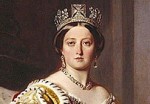
Queen Elizabeth II, on the occasion of her Diamond Jubilee, has made available the complete online collection of Queen Victoria’s journals from the Royal Archives, in collaboration with the Bodelian Library. Thirteen volumes are in Victoria’s own hand; others are copies made by her youngest daughter, Beatrice. There are also transcriptions and, to my surprise, illustrations by Queen Victoria. I had no idea that she was such a good artist. I had a great time browsing and reading the details of her existence, from the mundane to landmark events like her marriage to Albert.

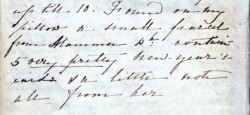
The words she herself wrote on New Year’s Eve 1836, describe a gift from her mother:

Here is the page on which she (Princess Beatrice’s copy) describes dressing on her wedding day; it includes a small drawing she made of herself in her headdress.

Besides the present queen, Victoria was the only English monarch to have celebrated a diamond jubilee.

posted May 28th, 2012 by Janet, Comments Off on Queen Victoria’s Journals (!!??), CATEGORIES: Reading old documents

“an account of the dress of the ladies”

In 1786, John Adams was representing the United States at the Court of St. James’s. Abigail and their daughter “Nabby” were in London with him. Abigail wrote a letter to her niece, Lucy Cranch, in which she recounted the events she was obliged to attend as the wife of the ambassador, and she described at some length the prevailing fashions.

London, 2 April, 1786To amuse you, then, my dear niece, I will give you an account of the dress of the ladies at the ball of the Comte d’Adh’mar. … They were much more properly clad; silk waists, gauze or white or painted tiffany coats decorated with ribbon, beads or flowers, as fancy directed, were chiefly worn by the young ladies. Hats turned up at the sides with diamond loops and buttons of steel, large bows of ribbons and wreaths of flowers, displayed themselves to much advantage upon the heads of some of the prettiest girls England can boast. The light from the lustres is more favorable to beauty than daylight, and the color acquired by dancing, more becoming than rouge, as fancy dresses are more favorable to youth than the formality of a uniform. There was as great a variety of pretty dresses, borrowed wholly from France, as I have ever seen; and amongst the rest, some with sapphire-blue satin waists, spangled with silver, and laced down the back and seams with silver stripes; white satin petticoats trimmed with black and blue velvet ribbon; an odd kind of headdress, which they term the ” helmet of Minerva.” I did not observe the bird of wisdom*, however, nor do I know whether those who wore the dress had suitable pretensions to it.

“And pray,” say you, “how were my aunt and cousin dressed?” If it will gratify you to know, you shall hear. Your aunt, then, wore a full-dress court cap without the lappets, in which was a wreath of white flowers, and blue sheafs, two black and blue flat feathers (which cost her half a guinea a-piece, but that you need not tell of), three pearl pins, bought for Court, and a pair of pearl earrings, the cost of them no matter what; less than diamonds, however. A sapphire blue demi-saison with a satin stripe, sack and petticoat trimmed with a broad black lace; crape flounce, &c.; leaves made of blue ribbon, and trimmed with white floss; wreaths of black velvet ribbon spotted with steel beads, which are much in fashion, and brought to such perfection as to resemble diamonds; white ribbon also in the Vandyke style, made up of the trimming, which looked very elegant; a full dress handkerchief, and a bouquet of roses. “Full gay, I think, for my aunt.” That is true, Lucy, but nobody is old in Europe. I was seated next the Duchess of Bedford, who had a scarlet satin sack and coat, with a cushion full of diamonds, for hair she has none, and is but seventy-six, neither.

Well, now for your cousin; a small, white Leghorn hat, bound with pink satin ribbon; a steel buckle and band which turned up at the side, and confined a large pink bow; large bow of the same kind of ribbon behind; a wreath of full-blown roses round the crown, and another of buds and roses withinside the hat, which being placed at the back of the hair, brought the roses to the edge; you see it clearly; one red and black feather, with two white ones, completed the headdress. A gown and coat of Chambéri gauze, with a red satin stripe over a pink waist, and coat flounced with crape, trimmed with broad point and pink ribbon; wreaths of roses across the coat; gauze sleeves and ruffles. But the poor girl was so sick with a cold, that she could not enjoy herself, and we retired about one o’clock without waiting supper. …

Thus, my dear girl, you have an account which perhaps may amuse you a little. … I am engaged three days this week,—to a rout at the Baroness de Nolken’s, the Swedish minister’s, to a ball on Thursday evening, and to a dinner on Saturday. Do not fear that your aunt will become dissipated, or in love with European manners; but, as opportunity offers, I wish to see this European world in all its forms that I can with decency. I still moralize with Yorick, or with one more experienced, and say ” Vanity of vanities, all is vanity.”

*Small bonnets worn by English ladies in the late eighteenth century were patterned after the Helmet of Minerva, who was the Goddess of Wisdom. So odd looking that the French used them in caricatures of English women, they were pronounced “awkward, inelegant … and deservedly-abolished.” The “bird of wisdom” refers to the goddess’ symbol, the owl.

This excerpt is from Letters of Mrs. Adams, the Wife of John Adams. with an Introductory Memoir by her Grandson, Charles Francis Adams, Volume II (Boston: Charles C. Little and James Brown, Second Edition, 1849), pages 130-34. The illustration is from The Manual of Elegant Recreations, Exercises and Pursuits—The Young Lady’s Book (London: Vizetelly, Branston, and Co., 1829, page 285. The cream-colored satin shoe is thought to have been worn by Abigail, ca. 1789.

posted May 24th, 2012 by Janet, Comments Off on “an account of the dress of the ladies”, CATEGORIES: Adams, Abigail, Americans Abroad, Cranch, Lucy, Fashion, London

Braving the Trials of Travel

Today people think nothing of getting in a car or plane to go on a vacation or business trip, but, in the late eighteenth century, any excursion away from home would not have been undertaken lightly. It would have required careful planning and luck. Major roads were few and ill maintained. The traveler who did undertake a journey was at the mercy of rain, snow, swollen creeks, unreliable ferry service, collapsing bridges, injured or sick horses, ill-kept taverns, lack of food, and inhospitable inhabitants. Martha Washington was indeed “fortunate” when she traveled (in eighteen days) from Mount Vernon, Virginia to Cambridge, Massachusetts, by carriage to join her husband in December 1775: “we were fortunate in our time of setting out as the weather proved fine all the time we were on the road. … we had a very plasent journey through new england. …”

A traveler might have letters of recommendation to private homes along the route. Henrietta Marchant Liston and her husband Robert, the British Minister to the United States, found such letters useful on their trip through the south in the winter of 1797. However, south of Halifax, North Carolina, on December 20, 1797:

[W]e were obliged to take up our quarters, in what was called an Inn, Consisting of one room containing two Beds, one for the family, the other for Strangers, there were two young Men travelling on Horseback, besides several Inferior Guests, & I found that all the Party, except our Servants, who were in a ruinous outKitchen, must lodge in this Chamber – the doors being all open warming oneself was out of the question. … One of the group around the fire appearing & intoxicated, & seeming disposed to amuse himself with a Pistol, I took the Daughter of the House aside, & declared our readiness to be contented with any place, in order to Sleep in a separate Apartment from the Men, She regretted that there was nothing but an empty Garrett, used for keeping Corn, without fire or door, & an open window, it was frost & snow, but we had taken our resolution, & we repaired to an old flat bed. …

Upon returning home to Philadelphia in early February, 1798, Henrietta wrote in her journal: “Pleased, on reflection, to have made this journey, but feeling, that few things could tempt me to repeat it.”

Washington quote from In the Words of Women, Chapter 1, page 41. Liston excerpt from Henrietta Liston’s journals, Liston Papers, microfilm, Library of Congress.

posted May 21st, 2012 by Janet, Comments Off on Braving the Trials of Travel, CATEGORIES: Liston, Henrietta Marchant, Travel, Washington, Martha

“the Horrible wickedness of the Man”

Abigail Adams, in a letter to her husband from Braintree, Massachusetts, July 25, 1775, described British General “Gentleman Johnny” Burgoyne, who was stationed in Boston at the time. Abigail took a dim view of him. He would later lead an invasion force from Canada, pushing south toward Albany, New York, by way of Lake Champlain, Lake George, and the upper Hudson. His attempt to divide the colonies failed when he was defeated at Saratoga in 1777.


General Burgoyne lives in mr. Samll. Quincys House. a Lady who lived opposite Says she Saw raw meat cut & hacked upon her Mahogona Tables, & her Superb Damask curtain & cushings exposed to the rain as if they were of no value. How much better do the Tories fare than the Whigs? … A Late letter from London … has left me no room to think that he is possessd either of Generosity virtue or Humanity. His character runs thus—as to Burgoyne I am not Master of Language Sufficient to give you a true Idea of the Horrible wickedness of the Man, His designs are dark His Dissimulation of the Deepest die, for not content with Deceiving Mankind he practices deceit on God himself, by Assuming the Appearance … of great attention to Religious Worship when every action of his life is totally abhorant to all Ideas of true Religion Virtue or common Honesty. An Abandoned Infamous Gambler of broken fortune … wholly bent on Blood tyrany and Spoil.

This excerpt is from In the Words of Women, Chapter 3, page 72.

posted May 17th, 2012 by Janet, Comments Off on “the Horrible wickedness of the Man”, CATEGORIES: Adams, Abigail, British soldiers, Burgoyne, Gerneral John, Saratoga

next page

   Copyright © 2026 In the Words of Women.