The United States in 1784

“My Dearest Friend”

I’m putting off writing about Alexander Hamilton’s friendship(?) with his sister-in-law until next time because I want to draw your attention to a performance of an opera based on the letters of Abigail and John Adams called My Dearest Friend to be performed this weekend (July 2) at the Adams National Historical Park in Quincy, Massachusetts. I wish I were able to go but since I cannot I am hoping that some of my readers might. I have always loved the Adams correspondence and compliment Patricia Leonard for using selected letters as lyrics. Featured will be soprano Wendy Bryn Harmer as Abigail and baritone Charles Taylor as John. I was alerted to this performance by J. L. Bell’s excellent blog Boston 1775.
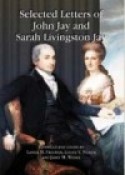
When my colleagues Louise North and Landa Freeman and I were mulling over titles for our book about the correspondence between John Jay and his wife Sarah Livingston Jay, we decided on My Dearest Best of Friends, a salutation frequently used in their letters. Our publisher sadly nixed it opting for the rather dull and academic Selected Letters of John Jay and Sarah Livingston Jay. We always thought that the Jay letters rivaled the Adams correspondence, a close second perhaps. Maybe someone will do an opera based on the Jay correspondence.

“I shal be miserable till I se you”

Having begun an affair with blonde twenty-three-year old MARIA REYNOLDS (1768-1832) in the summer of 1791, when his wife Elizabeth Schuyler Hamilton (pictured) and their children were vacationing in Albany with her family, Alexander Hamilton received this note from Maria in December. Her husband had returned and quickly saw an opportunity to blackmail Hamilton.

I have not tim to tell you the cause of my present troubles only that Mr. has rote you this morning and I know not wether you have got the letter or not and he has swore that If you do not answer It or If he dose not se or hear from you to day he will write Mrs. Hamilton he has just Gone oute and I am a Lone I think you had better come here one moment that you May know the Cause then you will the better know how to act Oh my God I feel more for you than myself and wish I had never been born to give you so mutch unhappiness do not rite to him no not a Line but come here soon do not send or leave any thing in his power.

Although, at that time, Hamilton’s actions were grounds for a duel, James Reynolds chose to ask for money instead. For $1,000 Reynolds proposed to leave his wife to Hamilton and depart the city taking his daughter with him. Hamilton would not or could not come up with such a sum but gave Reynolds money in small amounts while the affair continued. Apparently Reynolds was satisfied with this arrangement. Maria wrote to Hamilton again.

I have kept my bed those tow days past but find my self mutch better at presant though yet full distreesed and shall till I se you fretting was the Cause of my Illness I thought you had been told to stay away from our house and yesterday with tears I my Eyes I beged Mr. once more to permit your visits and he told upon his honnour that he had not said anything to you and that It was your own fault believe me I scarce knew how to beleeve my senses and if my seturation was insupportable before I heard this It was now more so fear prevents my saing more only that I shal be miserable till I se you and if my dear freend has the Least Esteeme for the unhappy Maria whos greateest fault Is Loveing him he will come as soon as he shall get this and till that time My breast will be the seate of pain and woe

P. S. If you cannot come this Evening to stay just come only for one moment as I shal be Lone Mr. is going to sup with a friend from New York.

When Reynolds subsequently tangled with the law—having committed forgery—and was imprisoned, he called upon Hamilton for assistance. When Hamilton refused, Reynolds released information about the affair and also suggested Hamilton had been involved in financial improprieties when he was Secretary of the Treasury. Rather than have his professional conduct impugned, Hamilton opted to admit to the affair with Maria and deal with the personal repercussions of a sexual scandal. Of course, he broke off his relationship with Maria.
Over time, Hamilton paid more than $1000 in blackmail to James Reynolds to keep the affair secret. Maria eventually divorced her husband; Aaron Burr was her attorney.

See this ARTICLE for more information. The portrait of Elizabeth Schuyler Hamilton is by Ralph Earl (1787) and is at The New-York Historical Society.

posted June 27th, 2016 by Janet, comments (1), CATEGORIES: Hamilton, Alexander, Hamilton, Elizabeth Schuyler, Reynolds, Maria

“other than pecuniary consolation”

With all of the publicity surrounding the Broadway musical Hamilton, I thought I would devote some space to two women with whom Alexander Hamilton is said to have had affairs. His liaison with MARIA REYNOLDS is known for certain because he himself admitted to their affair (1791-1792) in order to clear himself of charges of financial impropriety during his tenure as Secretary of the Treasury. In 1797 he published “Observations on Certain Documents” from a draft of which the following excerpt is taken. In it Hamilton describes how the affair began. Subsequently James Reynolds, Maria’s husband, blackmailed Hamilton demanding money to keep the affair secret. Publishing the details must have been difficult for Hamilton but maintaining a spotless reputation during his public service was more important to him than the scandal resulting from a sexual escapade. In the end Hamilton is likely to have suspected that husband and wife had colluded to set him up.

Some time in the Summer of the year 1791 a woman called at my house in the City of Philadelphia and asked to speak with me, apart in private. She was shewn into the parlour and I where I quickly after went where I went to her. She introduced herself by telling With an seeming apparent air of distress she informed me that she was a daughter of a Mr. Lewis of the State of New York and a sister to a Mrs. G—— Livingston of the State of New York and wife to a Mr. Reynolds whose father was in the Commissary or Quarter Master department during the war with Great Britain—that he had lately lef that her husband had for a long time treated her very cruelly w had lately left her to live with another woman and so destitute that though desirous of returning to her friends she had not the means—that knowing I was a citizen of the same State of New York she had take the liberty to address herself to my humanity for relief. There was something odd in the application and the story yet there was a genuineness simplicity and modesty in the manner of relating it which gave an impression of its truth. I replied that her situation was an interesting one & that I was disposed to afford her as much aid as might be necessary sufficient to convey her to her friends—but, that at the instant it was not convenient to me, (which was truly the case) that if she would inform me where she was to be found I would send or bring it to her in the course of the day. She gave me the Street and the number of the house where she would be found lodged. In the Evening I put a thirty dollar bill in my Pocket and went to the house where I inquired for Mrs. Reynolds and was shewn up Stairs into at the head of which she met me and conducted me into a bed room. I took the bill out of my pocket and delivered it to him her. Some conversation ensued which made it quickly apparent that other than pecuniary consolation would not be unacceptable. It required a harder heart than mine to refuse it to a pretty woman Beauty in distress.

After this, I had frequent meetings with her—most of them at my own house. Mrs. Hamilton being absent on a visit to her father with her Children. . . .

Next time some excerpts from letters Maria wrote to Hamilton.

“Draft of the “Reynolds Pamphlet”, [25 August 1797],” Founders Online, National Archives (http://founders.archives.gov/documents/Hamilton/01-21-02-0138-0001 [last update: 2016-03-28]). Source: The Papers of Alexander Hamilton, vol. 21, April 1797 – July 1798, ed. Harold C. Syrett. New York: Columbia University Press, 1974, pp. 215–238.
The illustration of Hamilton is a photograph of a painting by John Trumbull; 1 negative: glass [between 1900 and 1912]. Prints & Photographs Division, Reproduction Number: LC-DIG-det-4a26168.

posted June 23rd, 2016 by Janet, comments (0), CATEGORIES: Hamilton, Alexander, Reynolds, Maria

Louisa

I have just finished reading the new biography of LOUISA JOHNSON ADAMS, the wife of John Quincy Adams, Louisa—the Extraordinary Life of Mrs. Adams by Louisa Thomas (New York: Penguin Press, 2016). Before this biography came out there were two blog posts on Louisa, here and here. I was fascinated by her when I wrote them and am more so now. Her life goes beyond the time frame I had set for this blog (1800) and so I did not write more about her. I urge you to read this book to follow her life to its end. During the latter part of her life Louisa wrote several memoirs: “The Adventures of a Nobody,” “Narrative of a Journey from Russia to France,” and “Record of A Life.” They are quite extraordinary.

John Quincy Adams met Louisa in London at the home of her father who was the American consul; her mother was English. They married after a peculiar courtship. Their relationship blew hot and cold throughout their marriage—John Quincy was a strange, difficult man. And, believe me, you wouldn’t have wanted Abigail Adams for a mother-in-law.) Louisa was torn between being a thinking, courageous, active woman and the subservient wife that a woman was expected to be at that time. She lived abroad as John Quincy cycled through various diplomatic assignments. In Washington she devoted herself to furthering her husband’s ambitions, first to become secretary of state and then president. Louisa was a small woman and her health was delicate; she endured numerous miscarriages and outlived all but one of her children.

The author Louisa Thomas has done a marvelous job of telling Louisa’s story, drawing on the memoirs and the voluminous correspondence with members of the family and others. (John Quincy’s father took to her early on and his mother Abigail warmed to her eventually.) The book of 458 pages reads like a novel; you won’t be able to put it down.

The painting is of Louisa as a young woman and was painted by Edward Savage. It is the property of the National Park Service.

posted June 20th, 2016 by Janet, comments (0), CATEGORIES: Adams, Louisa Catherine

“our Lady Presidentess”

After the death of her child in 1789, JUDITH SARGENT STEVENS MURRAY and her husband John embarked on a six-month journey, via horse-drawn carriage, from Gloucester to a Universalist convention in Philadelphia. She wrote letters to her parents describing her encounters along the way. In 1790 she wrote from New Rochelle, New York, describing a meeting with Martha Washington in New York City, which was then the capital of the United States. This is a repeat of a blog posted in 2011.

About Six O-clock we took a coach for the presence … Colonel Humphry’s, offering his hand, ushered us into the drawing room, a number of Ladies were with Mrs Washington, and her matronlike appearance, and Lady like condescension, soon dissipated every painful idea of distance—taking my hand she seated me by her side, and addressing herself particularly to me, as the only stranger present, she engaged me in the most familiar, and agreeable Chat—. … Mrs Washington’s face is an index of a good heart, and those Virtues which I am told she eminently possesseth, are impressed upon every feature—need I add, that her countenance is irresistibly prepossessing. … Thursday, very unexpectedly opened another scene—I was sitting in my little apartment, alone, and buried in thought—strange that I possessed not the smallest presentiment, of the distinction which awaited me—but so it was … Mrs Washington, and Mrs Lear [the wife of Tobias Lear George Washington’s secretary and friend] were immediately ushered in. If any thing could exceed my surprise, it was the charming freedom with which Mrs Washington took her seat—The unmeaning fopperies of ceremony seem to make no part of this Lady’s Character, inborn benevolence, beams upon her countenance, points her address, and dictates the most pleasing expressions to her lips—one whole hour she condescendingly devoted to me, and so much friendship did her salutations connect, so interesting and animated was our conversation, that a bystander would not have entertained an idea of the distance between us, would hardly have supposed, that we met but for the second time, thus benignly good, and thus adorned with social virtues is our Lady Presidentess, and I confess that in a way perfectly correspondent with my feelings, I have been most highly gratified. …”

Note the use of the word condescension” above. It has a pejorative connotation today, but in the eighteenth century its use was intended to be flattering, connoting the virtue of “generosity.” Judith Murray continued to speak out and write on social and political issues. She wrote plays that were performed at the Boston Theatre on Federal Street and she was the first woman to self-publish a book, The Gleaner, in 1798. After John Murray died Judith went to live with her daughter and her husband Adam Lewis Bingaman in Natchez. She died in 1820 at the age of 69.

This excerpt is from From Gloucester to Philadelphia in 1790: Observations, Anecdotes, and Thoughts from the 18th-Century Letters of Judith Sargent Murray, Bonnie Hurd Smith, ed. (Cambridge, Mass.: Judith Sargent Murray Society and Curious Traveller Press, 1998), pages 246, 248-250, 254. Portrait from Phebe A Hanaford, Daughters of America (Augusta: True and Company, 1882), page 109,

posted June 16th, 2016 by Janet, comments (0), CATEGORIES: Murray, John, Murray, Judith Sargent Stevens, New York, Washington, Martha

next page

   Copyright © 2025 In the Words of Women.