Dubious Sources #3

Helen Evertson Smith of Sharon, Connecticut, published Colonial Days & Ways as Gathered from Family Papers in 1909. The book includes a lively description of a Thanksgiving feast held by the family in 1779 in the midst of the War:

Grandmother Smith objected that it were better “to make it a Day of Fasting & Prayer in view of the Wickedness of our Friends & the Vileness of our Enemies. … All the baking of pies & cakes were done at our house & we had the big oven heated & filled twice each day for three days before it was all done . … Of course we could have no Roast Beef. None of us have tasted Beef this three years as it all must go to the Army, & too little they get poor fellows. But, Nayquittymaw’s Hunters were able to get us a fine red Deer, so that we had a good haunch of Venisson on each Table.” Plus pork, turkey, a goose, pigeon pasties, and many vegetables to feed the large gathering of family, friends, orphans, and displaced persons.

The trouble is, although the Smiths of Sharon were real people, none of the descriptions in the book are true and are filled with anachronisms; moreover, the “family papers” have never been found. Helen E. Smith created these scenarios and peopled them with real family members to tell her tale of times gone by; it is what Professor Laurel Thatcher Ulrich of Harvard calls a good example of “Inventing New England.” Thanksgiving was not made a national holiday until late in the 19th century and that is mirrored in this account. When there was a day of Thanksgiving in the eighteenth century, such as Governor John Jay proclaimed in New York after an epidemic, it was a day of fasting. The Helen E. Smith papers, housed at The New-York Historical Society must thus be used with extreme caution.

See In the Words of Women, page xiv.
posted January 14th, 2013 by Janet, Comments Off on Dubious Sources #3, CATEGORIES: Primary sources, Reading old documents

Dubious Sources #2

Knowing that primary sources need to be used with caution, we compilers/editors of In the Words of Women, were nevertheless almost taken in by several that were not what they purported to be. One was Theatrum Majorum, the Cambridge of 1776 … with which is incorporated The Diary of Dorothy Dudley, Dudley presumably being an eighteenth century woman. She was not, we discovered. Historian Mary Beth Norton in William & Mary Quarterly, 1976, called attention to the Centennial celebrations in Cambridge, Massachusetts, as the origin of the work, which was written by Arthur Gilman in 1876. Despite Norton’s evidence, several compilations included selections from this nineteenth century “diary,” presenting them as authentic eighteenth century writings.

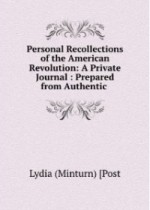
In the course of our research we thought we had found a wonderfully detailed diary in Personal Recollections of the American Revolution; a Private Journal Prepared From Authentic Domestic Records by Lydia Minturn Post, published in 1859. However, in the Journal of Women’s History, 1989, Mary Beth Norton attributed the journal to Sidney Barclay. Norton herself had been taken in by the ‘Post’ diary for her book Liberty’s Daughters, though she did have her doubts about it and said it had to be used “with caution.” This source has also been reproduced as authentic in more recent compilations.

See In the Words of Women, pages xiv and 341-42..

posted January 10th, 2013 by Janet, Comments Off on Dubious Sources #2, CATEGORIES: Letter-writing, Primary sources, Reading old documents

Dubious sources #1

Dear reader: Are you a teacher? If so, you may be interested in a new item in the Colonial Williamsburg series called Electronic Field Trips. Its title is “Research Rescue Squad” and it is designed to help students (and anyone doing research) find and evaluate primary source material using the Internet, libraries, and museums. Its broadcast premiere is January 17, 2013; a subscription to this “Field Trip” costs $120. In it an evil mastermind, “Dubious Sources,” is stealing books, removing footnotes, and confusing students with false information. You can see a trailer HERE. Once upon a time students believed something must be true because it was in a book. Now many students have the same attitude toward the Internet. “Research Rescue Squad” will disabuse them of that notion. Read the next post for some examples of dubious sources my colleagues and I encountered in writing In the Words of Women.

posted January 7th, 2013 by Janet, Comments Off on Dubious sources #1, CATEGORIES: Primary sources

Remembering Gerda Lerner

it is right and proper that the authors of In the Words of Women acknowledge a debt of gratitude to Gerda Lerner, historian, author, teacher, and activist, who died on January 2 at the age of 92. When Lerner graduated with a doctorate in history from Columbia University in the 1960s, she remarked that the number of historians interested in women’s history “could have fit into a telephone booth.” Not only were women historians few in number, Lerner noted, historians in general had, for the most part, ignored the study of women in history. In an interview she recalled that “in my courses, the teachers told me about a world in which ostensibly one-half the human race is doing everything significant and the other half doesn’t exist.” Lerner spent her life trying to remedy that disparity. She taught what is considered to be the first women’s history course at the New School for Social Research in New York City in 1963. She established a women’s studies program as well as the first master’s degree program in that area at Sarah Lawrence College in Bronxville, New York. At the University of Wisconsin she developed the first Ph.D. program in women’s history in the United States. She had a major role in persuading the academic community to acknowledge women’s history as a bona fide area of study and encouraged students and fledgling historians to focus on women in history by gathering and publishing anthologies of primary source materials. It is not an exaggeration to say that but for Lerner’s influence, it is unlikely that In the Words of Women would have seen the light of day.

posted January 3rd, 2013 by Janet, comments (1), CATEGORIES: Primary sources, Research

previous page

   Copyright © 2026 In the Words of Women.