“Daphne . . . makes the bread”
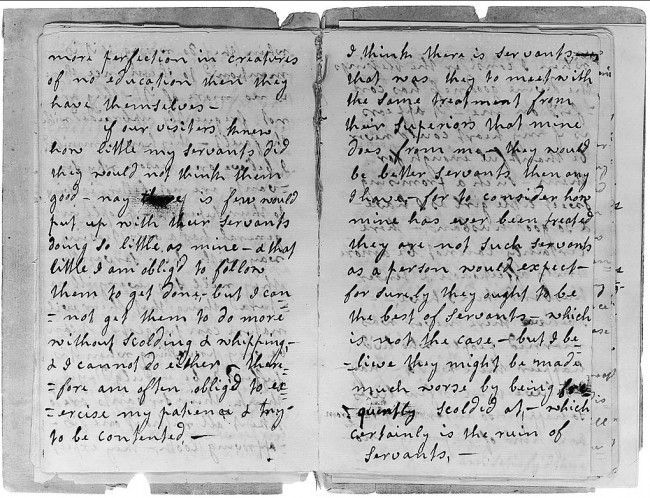
Whereas there is no information regarding the number of “servants,” i.e. slaves, Elizabeth Foote Washington had to manage (see previous post), Eliza Pinckney, a wealthy plantation owner, made a list of her domestic help. This is after the marriage of her children when she was living in a modest house in Charleston, South Carolina.
I shall keep young Ebba to do the drudgery part, fetch wood, and water, and scour, and learn as much as she is capable of Cooking and Washing. Mary-Ann Cooks, makes my bed, and makes my punch. Daphne works and makes the bread, old Ebba boils the cow’s victuals, raises and fattens the poultry, Moses is imployed from breakfast until 12 o’clock without doors, after that in the house. Pegg washes and milks.
One wonders what Eliza did with her time with all of these servants relieving her of various household tasks. Wives of farmers in the back country had little or no help and worked very hard. One visitor noted that they “. . . take care of Cows, Hogs, and other small Cattle, make Butter and Cheese, spin Cotton and Flax, help sow and reap Corn, wind Silk from the Worms, gather Fruit, and look after the House.”