“an evident distinction between the male and female”

Dr. William Buchan, Fellow of the Royal College of Physicians, Edinburgh, is famous for a book called Domestic Medicine: or, a Treatise on the Prevention and Cure of Diseases by Regimen and Simple Medicines, with an Appendix, containing a Dispensatory for the Use of Private Practitioners. Originally published in 1769, it ran to 22 editions and was translated into many languages. It was popular throughout Europe as well as in the American colonies. When Abigail Adams sailed to Europe to join John in 1784 she took a copy of Buchan along with her. The book is full of what seems to us today to be common sense advice: the value of cleanliness, a sensible diet, the benefits of exercise. Here is what Dr. Buchan says about women at the beginning of his chapter on the “Diseases of Women” which include “Menstrual Discharge. Pregnancy, Child-birth, and Barrenness”. It was common during that time to term these natural processes diseases. Giving birth was referred to as “being ill.”

Women, in all civilized nations, have the management of domestic affairs, and it is very proper they should, as Nature has made them less fit for the more active and laborious employments. This indulgence, however, is generally carried too far; and females, instead of being benefited by it, are greatly injured, from the want of exercise and free air. To be satisfied of this, one need only compare the fresh and ruddy looks of a milk-maid with the pale complexion of those females whose whole time is spent within doors. Though Nature has made an evident distinction between the male and female with regard to bodily strength and vigour, yet she certainly never meant, either that the one should be always without, or the other always within doors.

The confinement of females [constriction by corsets, etc.] besides hurting their figure and complexion, relaxes their solids, weakens their minds, and disorders all the functions of the body. Hence proceed obstructions, indigestion, flatulence, abortions, and the whole train of nervous disorders. These not only unfit women for being mothers and nurses, but often render them whimsical and ridiculous. A sound mind depends so much upon a healthy body, that where the latter is wanting, the former is rarely to be found.

I have always observed, that women who were chiefly employed without doors, in the different branches of husbandry, gardening, and the like, were almost as hardy as their husbands, and that their children were likewise strong and healthy.

Domestic Medicine can be read ONLINE. The excerpts in this post are taken from pages 521-22.

posted May 12th, 2014 by Janet, Comments Off on “an evident distinction between the male and female”, CATEGORIES: Childbirth, Health, Medicine

“to drink tea & eat whiggs”

Having relocated from Madrid to Paris in 1782 with her husband John Jay, who had been named a peace commissioner deputed to help draw up a treaty of peace with Britain, Sarah Livingston Jay made the acquaintance of Americans living there. She also took pleasure in entertaining the children of American friends who had been sent abroad by their parents to be educated. She wrote to her mother in August 1782: “Today I had the pleasure of the Company of Mr. Morris’s two sons, Mrs. Montgomery’s son & one of Mrs. Izard’s sons, & you can’t imagine how happy I feel in seeing them.” Writing to Mary White Morris in November, 1782, she commented:

Yesterday your little sons by passing their holiday with me made me very happy – Robert so exceedingly resembles Mr. Morris that I feel for him a respect mingled with my love; tho’ at the same time I regret his distance from his father’s example & counsel – When (as it sometimes happens) among our Little Americans that my decision is referr’d to respecting matters of right & wrong, I always request Robert’s opinion; & when he hesitates, I ask him what he thinks would be his Father’s sentiments upon such occasions, to which he generally replys very justly; & I remark to him the certainty of his acting with propriety while he imitates so worthy an example—Tommy (who is likewise a fine boy) told me that his last letters mention’d Hetty’s & Maria’s illness—I hope they are now quite recovered as well as my dr. Kitty – will you embrace them for me?

In a letter to her sister Kitty in April 1783, Sarah wrote:

Present my Compts. to Mrs. Morris. . . . I’m sure she’ll envy me the pleasure I’m to have this afternoon, when I tell you that her little sons are to drink tea & eat whiggs with me.

Whiggs, spelled alternatively whigs or wiggs, are slightly sweetened little buns, lighter and richer than ordinary bread and therefore served as a treat. They were usually flavored with caraway seeds. The name may have been derived from an old Norse word meaning “wedge”, which suggests that the dough was made into a round loaf and then cut across to form wedges. Pictured in the illustration is a wooden utensil with metal spikes called a baker’s “docker”; it was used to prick the bottoms of the buns so that they would rise evenly.

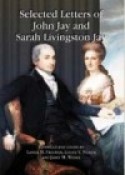
For the readings my colleagues Landa Freeman, Louise North, and I have given based on our book Selected Letters of John Jay and Sarah Livingston Jay, Louise often made whiggs for our audience to sample. Here is the modern recipe for this bun.

1 cup milk
1 packet Fleischman’s yeast
1/2 cup butter
1/3 (or less) cup lukewarm water
1/4 cup sugar
1/2 teaspoon cinnamon
3 eggs
1/4 teaspoon mace or nutmeg
4+ cups flour
1 teaspoon salt [optional]

1. Scald the milk and add butter, sugar, and salt; let cool to blood heat [body temperature].
2. Dissolve yeast in 1/3 cup lukewarm water and add to milk mixture.
3. Beat eggs until very light; add them and spices to milk mixture.
4. Sift in enough flour to make a stiff dough. Knead well and let rise in a covered bowl. (2+ hrs)
5. When it has risen, punch down, roll dough out on floured board to 3/4 inch thickness.
6. Cut with biscuit-cutter, put in baking or muffin pan, and set in warm place to rise again. (1 hr)
7. Bake in hot oven [400 degrees F] until brown, about 10 min.
8. Split and butter while hot. Serve with tea.

Sarah’s letters to her mother and sister Kitty can be found on pages 121 and 134 from Selected Letters of John Jay and Sarah Livingston Jay. Mrs. Morris is Mary White Morris, the wife of Robert Morris who was a merchant and financier of the American Revolution. Sarah’s comments about her sons can be found in the John Jay Papers, Rare Books and Manuscript Library, Columbia University. Information about whiggs and the illustration can be found HERE. Recipe used by permission of Patricia B. Mitchell, At the Table in Colonial America (Sims-Mitchell House Bed & Breakfast, Chatham, VA., 1994, p. 9. This recipe was originally taken from Sheila Hibben, The National Cookbook: a Kitchen Americana (Harper & Brothers: New York, 1932), page 6.

posted May 8th, 2014 by Janet, Comments Off on “to drink tea & eat whiggs”, CATEGORIES: Americans Abroad, Food, Paris

“I am much pleased with France.”

In 1779, John Jay, who was serving as president of Congress, was chosen to represent the United States as minister plenipotentiary to Spain. Unusual for that time, his wife Sarah Livingston Jay accompanied him, leaving their young son with her parents in New Jersey. Jay’s mission to secure money and supplies to support the war for independence was not successful. He was frustrated at every turn and was happy to be summoned by Benjamin Franklin to Paris in 1782 to help draft the treaty of peace with Britain. A child, named Susan, born to the Jays in Madrid, died. Another, Maria, was born there and made the trip with her parents to Paris. Arriving in June, the family was felled by a severe “disorder which from its very general influence was call’d influenza.” By August, Sarah was feeling much better and wrote to her mother describing what she saw on the journey from Bordeaux to Paris.

I am much pleased with France. It seems to be one of the favorite spots of Nature if we may judge of her disposition towards it by the enchanting prospects & fertile fields that perpetually engage the attention of a Traveller; but nothing pleased me more than the gaiety & industry of the inhabitants. I could not but remark their natural inclination for chearful objects displayed in their little flower gardens, for there is scarce a peasant’s cottage without the appurtenance of a garden & many of them have little bowers that discovers a very pretty taste; in short such was the impression which their apparent content & good Humour made upon me that I became again reconcil’d to the lot of humanity. . . .

Sarah paints a pretty picture of France which would be in turmoil by 1789.

Sarah’s letter can be found in Selected Letters of John Jay and Sarah Livingston Jay, page 121.

posted May 5th, 2014 by Janet, Comments Off on “I am much pleased with France.”, CATEGORIES: Americans Abroad, France

“Ninteenth Century Fantasy vs Eighteenth Century Reality”

Nancy K. Loane, the author of the book Following the Drum: Women at the Valley Forge Encampment (see previous post) has an essay in the appendix called “Making the Myth of Martha Washington.” It deals with the untruths and inaccuracies which over time have grown up around Martha Washington and the role she played as the wife of George Washington, particularly in the winter encampments of the Continental Army, both at Valley Forge and elsewhere. At issue is whether Mrs. Washington personally met with and gave solace and assistance to ordinary soldiers. Part of the problem is due to the fact that Martha destroyed almost all of her correspondence with her husband and there is little in her correspondence with others that confirms such contact. Those who have attributed such a role to her have depended on the writings of others, on oral histories which are suspect, or, indeed, have made up stories out of whole cloth. Examining various sources that make reference to such a role for Martha, Ms. Loane can find not one that is credible. The clincher for the author is that “the concept of the benevolent lady out among the poor and suffering soldiers belongs to the Romantic nineteenth century not the tradition-bound eighteenth century.”

As for Martha Washington’s appearance, I did like the impression Elizabeth Schuyler (she became the wife of Alexander Hamilton) had of her at Morristown, where Martha’s main contacts were the wives of other generals and her husband’s aides.

She received [my aunt and me] so kindly, kissing us both, for the general and papa were very warm friends. She was then nearly fifty years old, but was still handsome. She was quite short; a plump little woman with dark brown eyes, her hair a little frosty, and very plainly dressed for such a grand lady as I considered her. She wore a plain, brown gown of homespun stuff, a large white handkerchief, a neat cap,and her plain gold wedding ring, which she had worn for more than twenty years. She was always my ideal of a true woman.

Schuyler’s description is in Following the Drum: Women at the Valley Forge Encampment, page 190, taken from Hugh Howard, Houses of the Founding Fathers (New York: Artisan, 2007), page 147. The portrait of Martha Washington is by Gilbert Stuart, 1796.

posted May 1st, 2014 by Janet, Comments Off on “Ninteenth Century Fantasy vs Eighteenth Century Reality”, CATEGORIES: Patriots, Primary sources, Valley Forge, Washington, Martha

previous page

   Copyright © 2026 In the Words of Women.