“. . . a dangerous amusement for young ladies!”

I have become enchanted by a young woman named Charlotte Chambers. She was the second daughter of General James Chambers and Catherine Hamilton. A supporter of the Patriot cause, James Chambers served with the Pennsylvania infantry during the Revolution and wrote informative letters to his wife from his various postings. He returned to his home in Pennsylvania in 1781, volunteered again during the Whiskey Rebellion, served as a judge in Franklin County, and was made a brigadier-general in the militia raised in readiness for a possible war with the French that never happened. All the while his wife, as did many women, kept the home fires burning.

Their daughter Charlotte by all accounts was attractive, intelligent, and witty as her frequent letters to her mother during visits to friends and relatives attest. I especially like this one written from Woodbine while on a visit to her aunt and uncle, the Ewings, near Columbia on the Susquehanna River. In it she defends the reading of novels, an increasingly popular pastime among young women.

May 4, 1792.MY DEAR MOTHER:—
The first of March I arrived at Woodbine. How dreary was the scene! cold stormy winds, naked hills, muddy roads and pensive hours. Now rosy-footed May, ushered by gentle zephyrs, has clothed the fields in fragrant verdure. The birds warble melodiously through the blooming grove, and the time glides imperceptibly by in cheerful friendship.
At dinner to-day the reading of novels was denounced without mercy, as an unprofitable waste of time and a dangerous amusement for young ladies! I became for the occasion a champion in the defence as a means of rational entertainment, and inquired if they had ever known an instance of very great injury resulting from the perusal of fiction? They were obliged to confess they had not. I am sure history affords many instances of heroic exploits, tender attachments, inviolable friendships, as suddenly commenced, and perhaps as imprudently, as can be found in the field of fiction. If such examples are dangerous, young ladies should not read history, for truth must make a greater impression than fable! I would as soon be compelled to subsist on meat, without fruit or vegetables, as to be confined exclusively to sober matter of fact study. In ancient history we read of obscure barbarians rising to fame and glory by force of arms, with the horrid accompaniments of carnage, cruel oppression, massacre, envy, despair, revenge, and death! until we almost contemplate the human species with abhorrence; and can scarcely forbear pronouncing it a race of monsters only tamed by art. Even in books of travel, we read of arid deserts, burning sands, frozen seas, ferocious animals, poisonous serpents, stinging scorpions; and every variety of human misery. How delightful after those repulsive scenes are the pages of a well written novel or poem; where in the luxuriant images of peaceful valleys, virtuous peasantry, shady groves, roses, myrtle, love and friendship, we become reconciled to life.
I fear, dear mother, you will pronounce my opinions heterodox.
Your devoted daughter

Charlotte’s letter can be found in her Memoir by her grandson Lewis H. Garrard (Philadelphia: Printed for the Author, 1856) on page 12-13.

posted July 14th, 2014 by Janet, comments (1), CATEGORIES: Amusements

“the first martyr for the common good”

Black poet Phillis Wheatley wrote a poem about the four men killed by British soldiers in the Boston Massacre—a fifth died the next day— (see previous post). These men are considered to be the first martyrs to the American cause. But Wheatley wrote another poem about about a boy whom she called “the first martyr for the common good”. In “On the Death of Mr. Snider Murder’d by Richardson,” she gives an account of a boy named Christopher Snider (or Seider), killed two weeks before the Massacre.

Ebenezer Richardson was an informer for the British who passed along the names of Americans who were smuggling goods into the country without paying duties. On February 22, 1770, surrounded by an angry mob and fearing for his life, Richardson fired into the crowd killing Christopher Snider, a boy of eleven or twelve, the son of a German immigrant. Here is what Wheatley wrote.

In heavens eternal court it was decreed
Thou the first martyr for the common good
Long hid before, a vile infernal here
Prevents Achilles in his mid career
Where’er this fury darts his Pois’nous breath
All are endanger’d to the shafts of death
The generous Sires beheld the fatal wound
Saw their young champion gasping on the ground
They rais’d him up but to each present ear
What martial glories did his tongue declare
The wretch appal’d no longer can despise
But from the Striking victim turns his eyes—
When this young martial genius did appear
The Tory chief no longer could forbear.
Ripe for destruction, see the wretches doom
He waits the curses of the age to come
In vain he flies, by Justice Swiftly chaced
With unexpected infamy disgraced
By Richardson for ever banish’d here
The grand Usurpers bravely vaunted Heir.
We bring the body from the watry bower
To lodge it where it shall remove no more
Snider behold with what Majestic Love
The Illustrious retinue begins to move
With Secret rage fair freedom’s foes beneath
See in thy corse ev’n Majesty in Death.

Wheatley’s poem can be found HERE.

posted July 10th, 2014 by Janet, Comments Off on “the first martyr for the common good”, CATEGORIES: Boston, Patriots, Poetry, Resistance to British, Wheatley, Phillis

“Dear to your Country shall your Fame extend”

Phillis Wheatley, considered the first black poet in America (see posts concerning her here, here, here, and here), was an enslaved servant who at the age of seventeen was living in Boston with her owners, the Wheatleys, on the corner of King Street and Mackeral Lane not far from where the Boston Massacre took place on March 5, 1770. A poem attributed to her, “On the Affray in King Street, on the Evening of the 5th of March 1770” was published in the Boston Evening-Post on March 12. Her sympathies clearly lie with the Patriot cause. A transcription follows the image.

With Fire enwrapt, surcharged with sudden Death,
Lo, the pois’d Tube convolves it’s fatal Breath!
The flying Ball with heav’n-directed Force.
Rids the free Spirit of it’s fallen Corse.
Well fated Shades! let no unmanly Tear
From Pity’s Eye, distain your honour’d Bier:
Lost to their View, surviving Friends may mourn,
Yet o’er thy Pile shall Flames celestial burn;
Long as in Freedom’s Cause the Wise contend.
Dear to your Country shall your Fame extend;
While to the World, the letter’d Stone shall tell,
How Caldwell, Attucks, Grey and Mav’rick fell.

James Caldwell, Crispus Attucks (a mulatto), Samuel Grey, and Samuel Maverick, referred to in the poem, died immediately. A fifth, Patrick Carr, died the next day.

The image is from the Boston Evening-Post, 12 March 1770.

posted July 7th, 2014 by Janet, Comments Off on “Dear to your Country shall your Fame extend”, CATEGORIES: Boston, Patriots, Poetry, Slaves/slavery

“we celebrated the Anniversary of our Independance”

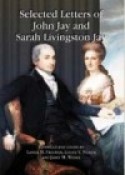
John Jay and his wife Sarah Livingston Jay were in Paris in July of 1783 where John as a Peace Commissioner had been influential in drafting the Preliminary Articles of Peace in 1782 which were awaiting the official signing. Sarah wrote a long letter to her sister Kitty in Elizabeth Town, New Jersey, including a passage describing how they had celebrated the anniversary of the Declaration of Independence.

Passy l6th July 1783
My dr. sister,
On the 4th of July we celebrated the Anniversary of our Independance here at Passey, but the next I hope to celebrate in yr. company, & I’m sure that our pleasure will not be less animated even tho’ we shou’d substitute butter-milk in lieu of champagne to commemorate the illustrious event. I’ll inclose you a copy of the toasts Mr. Jay prepar’d for the occasion. . . . How nearly my dear Kitty! does extreme felicity approach a painful sensation. I’ve more than once experienc’d it; nor were my feelings divested of that kind of sensibility on the 4th of July, for I found it difficult to suppress the tears that where ready to flow to ye memory of those who in struggling to procure that happiness for their country which we were then celebrating had fallen in the glorious attempt. . . .

Because the following toasts Sarah enclosed are in her hand it has been thought that she gave them on the occasion of the signing of the Treaty of Paris. However, upon close reading, it is clear that they are more appropriate for an Independence Day celebration and were most likely given by John Jay on July 4, 1783.

1. The United States of America, may they be perpetual.
2. The Congress.
3. The King & Nation of France.
4. General Washington & the American Army.
5. The United Netherlands & all other free States in the world.
6. His Catholic Majesty & all other Princes & Powers who have manifested
Friendship to America.
7. The Memory of the Patriots who have fallen for their Country. May kindness
be shown to their widows & children.
8. The French Officers & Army who served in America.
9. Gratitude to our Friends & Moderation to our Enemies.
10. May all our Citizens be soldiers, & all our soldiers Citizens.
11. Concord, Wisdom & Firmness to all American Councils.
12. May our Country be always prepared for War, but disposed to Peace.
13. Liberty & Happiness to all Mankind.

posted July 3rd, 2014 by Janet, Comments Off on “we celebrated the Anniversary of our Independance”, CATEGORIES: France, Independence, Paris

previous page

   Copyright © 2026 In the Words of Women.