Hannah Adams

HANNAH ADAMS is not related to the famous founder or his wife who have received so much attention. Born in 1755 in Medfield, Massachusetts, to Eleanor Clark and Thomas Adams, Hannah Adams led a sheltered life in an upper-class family because of what she termed “a feeble constitution.” Possessing a brilliant mind she was educated at home, as were many young women of those times, seeking enlightenment and pleasure in books: histories, poetry and novels. Her mother died when she was ten and, after her father’s business failed, she was forced to support herself. As sewing provided an insufficient income, she turned to writing, history in particular, becoming one of the first professional writers in the United States. Her books included a histories of New England, the Jews, and several religious works, among others. She was the first woman to be allowed into the Boston Athenaeum. Remaining single all her life, in 1832 she wrote her Memoirs. This work is a wonderful source of insights not only into her life but also into the times in which she lived. Here is what she had to say about her education.

My health did not . . . admit of attending school with the children in the neighborhood where I resided. The country schools, at that time, were kept but a few months in the year, and all that was then taught in them was reading, writing and arithmetic. In the summer, the children were instructed by females in reading, sewing and other kinds of work. The books chiefly made use of were the Bible and Psalter. . . . The disadvantages of my early education I have experienced during life; and among various others, the acquiring a very faulty pronunciation; a habit contracted so early, that I cannot wholly rectify it in later years.
In my early years I was extremely timid, and averse from appearing in company. Indeed, I found but few with whom I could happily associate. My life, however, was not devoid of enjoyment. The first strong propensity of my mind which I can recollect, was an ardent curiosity, and desire to acquire knowledge. I remember that my first idea of the happiness of Heaven was, of a place where we should find our thirst for knowledge fully gratified. From my predominant taste I was induced to apply to reading, and as my father had a considerable library, I was enabled to gratify my inclination. I read with avidity a variety of books, previously to my mind’s being sufficiently matured, and strengthened, to make a proper selection. I was passionately fond of novels; and, as I lived in a state of seclusion, I acquired false ideas of life. The ideal world which my imagination formed was very different from the real. My passions were naturally strong, and this kind of reading heightened my sensibility, by calling it forth to realize scenes of imaginary distress. I was also an enthusiastic admirer of poetry; and as my memory, at an early period, was very tenacious, I committed much of the writings of my favorite poets to memory, such as Milton, Thompson, Young, &c. I did not, however, neglect the study of history and biography, in each of which kind of reading I found an inexhaustible fund to feast my mind, and gratify my curiosity.

A Memoir of Miss Hannah Adams 1755-1831 (Boston: Grey and Bowen, 1832), pages 3-5.

posted March 10th, 2016 by Janet, comments (0), CATEGORIES: Adams, Hannah, Education

Research for “In the Words of Women”

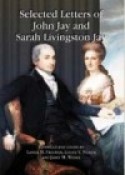
The book Selected Letters of John Jay and Sarah Livingston Jaytook approximately four+ years to research and write. In the Words of Women published in 2011 took six years, understandable because the scope was much broader than that of the first book and the research more challenging because many of the subjects were little known and obscure. On the other hand the research process was quite different for, in the space of time between books, libraries, historical societies, newspapers, and browsers like Goggle began to digitize their holdings and archives.
I was sceptical of the process at first with regard to manuscripts because I didn’t think the technology was good enough to produce legible copies. I was wrong. See for instance the Massachusetts Historical Society’s wonderful Adams Family Papers Historical Archive. The text of the correspondence between John and Abigail is clear, in part due to the legible handwriting of the pair, although you can consult a transcription if necessary. You can also zoom in on the pages and distinguish quite easily between a comma and a period, upper and lower case letters. Digitization of primary source materials allowed us to read them sitting at our computers.
There are, however, some drawbacks to this development. Digitization is a work in progress. Some institutions cannot afford the cost so there still is a large amount of material out there in manuscript form which still requires visits to libraries etc. Moreover holdings are often digitized selectively, based on someone’s judgment. Janice P. Nimura in her article in The New York Times Book Review titled “Under No Certain Search Terms” “Under No Certain Search Terms” points out another drawback: you get only the information that is relevant to the wording and focus of the search terms you entered in the browser. Nimura notes that “You find exactly what you’re looking for, and nothing that you’re not. . . . Search algorithms leave no room for serendipity, and without that, some of the magic leaks out of the pursuit of the past.” Do you remember browsing in the stacks and coming across other books of interest in the vicinity of the one you were looking for. Books that provide new information or details, or even a particular slant that you might not otherwise have discovered.
While digitization of sources relevant to the subjects of our second book was very useful and convenient, it did away with some of the excitement and pleasure of handling the actual letters, diaries and journals of the subjects, lessening the possibility of “research rapture” that scholars thrive on.

posted March 7th, 2016 by Janet, comments (0), CATEGORIES: Reading old documents, Research

Research Rapture

When Louise North, Landa Freeman and I assembled, selected, and edited the letters for our first book, Selected Letters of John Jay and Sarah Livingston Jay, (Jefferson, North Carolina: McFarland & Company, 2005), we spent an enormous amount of time in the Rare Book and Manuscript Library of Columbia University which housed the bulk of the Jay Papers. Each of us focused on a particular person and received manuscript letters we requested, in file folders, three at a time. Sitting side by side at long tables we transcribed those we thought were especially interesting, at first with pencil on paper, later using early generation laptop computers. The puzzle of an undecipherable word was usually solved by a whispered conference as were decisions as to whether a letter was upper or lower case. Of course, we tracked down other materials and physically visited the libraries and historical societies where they were located. Our final selections were made in weekly meetings where we read promising letters aloud. (We were having one such meeting at my house on the morning of September 11, 2001, when having been alerted by a phone call, we turned on the television set and watched in horror the attack on the World Trade Center.)

Reading a recent column in The New York Times Book Review titled “Under No Certain Search Terms” by Janice P. Nimura brought back memories of our research experience. Nimura speaks of “‘research rapture’—the rare and ecstatic moment when you slip the bonds of the present and follow a twinkling detail into the past.” I know it well. A letter written by Sarah Jay to her mother that made its way across the Atlantic from Spain to Elizabethtown, New Jersey in 1780, containing the news that the child she had recently given birth to had died produced tears on first reading, and still does today. Marveling over a letter written by Thomas Jefferson to John Jay from Paris in 1789 describing the various wines he was sending him after a tour of French vineyards, I could barely wrap my head around the thought that both men had touched the page I was reading. John Jay always noted on the top left corner of the reverse side the date on which he received the letter and when or if he responded to it. It was difficult to call a halt to the research process, as anyone who has written a thesis or book will admit.

Our experience in producing our next book, In the Words of Women, was rather different. I’ll write about that in the next post.

posted March 3rd, 2016 by Janet, comments (0), CATEGORIES: Jay, John, Jay, Sarah Livingston, Primary sources, Reading old documents

previous page

   Copyright © 2026 In the Words of Women.