A Fashion Exhibit in July and a Presentation in August

Again interrupting the letters between SARAH LIVINGSTON JAY in Paris and MARY WHITE MORRIS in Philadelphia with news of an exhibition concerning fashion, which has been the subject of exchanges between the two women. Fashioning the Body: An Interesting History of the Silhouette is at the Bard Graduate Center Gallery 18 West 86th Street, New York, New York 10024; 212.501.3023. (See the review here.) The exhibit is less about actual clothing for men and women (and children!) than what lay underneath. Nine black velvet tailor’s dummies show changes that occurred in the female silhouette from 1700 to the present. Of course, my interest is in the 18th century silhouette and what men and women (the socially elite) wore under their garments to create the currently fashionable look. Men padded their torsos and enhanced their calves with lambs’ wool. Women encased themselves in whalebone stays, hoops, panniers, and stomachers. There is even an articulated pannier (large side hoops named for the wicker baskets on the sides of pack animals) with hinges that collapsed, allowing women to navigate narrow doorways. The conclusion one comes to is that women voluntarily submitted themselves to what amounted to torture to achieve the desired look of the time. Keep this in mind when admiring the gorgeous dresses of the period. The exhibit is on until July 26.

ADVANCE NOTICE OF A READING to be given by the compilers/editors of In the Words of Women at the National Historic Park in Morristown, New Jersey, on August 16 at 1 pm. This site commemorates the encampment of George Washington and his troops during the winter of 1779-80, the coldest on record. Louise North, Landa Freeman, and I will give a PowerPoint presentation focusing on the lives of women during the Revolution and afterwards. Louise North will include material from her latest book The Travel Journals of Henrietta Marchant Liston, the wife of the British ambassador to the United States from 1796 to 1800. The talk will be followed by Q & A and the book by the trio will be available for sale and signing.

posted July 9th, 2015 by Janet, comments (0), CATEGORIES: Clothes, Fashion, Readings and Exhibitions

Visit of the “Hermione”

In a previous post, mention was made by SARAH LIVINGSTON JAY in a letter to MARY WHITE MORRIS of a dinner she had attended at the Lafayettes. (The Jays dined there frequently.) Gilbert du Motier, the Marquis, had returned to France after the victory at Yorktown in 1781 and was much celebrated. Marie Adrienne Françoise de Noailles, his wife, (pictured) had expressed a desire to visit America but she never did make that trip. Lafayette, however, returned to the United States in 1784 to visit George Washington. When he came back to Paris he became embroiled in the chaos of the French Revolution. He ordered the storming of the Bastille, sending the key of that prison as a souvenir to Washington.

Lafayette became the leader of the liberal aristocrats and favored a constitutional monarchy. For his views he, with many other aristocrats, were considered guilty of treason by the Radicals who had taken control of the Revolution. In the Reign of Terror that followed, he was seized and imprisoned in Austria. Since Adrienne came of an old aristocratic family, her mother, grandmother, and sister were guillotined. (Read a description of the execution recorded by their Catholic confessor here.) She was also arrested but her life was spared due to the intervention of prominent Americans. When Adrienne was released she, with two of her daughters, joined her husband in prison in Austria. (That sort of thing was done back then.) In 1797 Lafayette was freed and, with his family, returned to France. Sadly Adrienne died at age 47 in 1807. Lafayette made another trip to the United States in 1824. It was a triumphal tour.

We were reminded of his visit by an event that occurred this past weekend when a replica of the ship Hermione on which Lafayette sailed in 1824 arrived in New York. Passing Governor’s Island to the sound of celebratory cannon fire, the three-masted, 32-gun frigate docked at the South Street Seaport. On Sunday, accompanied by many private vessels, it sailed around the southern tip of Manhattan past the Statue of Liberty and up the Hudson River to the Intrepid. Returning to the East River it made its way to Greenport on Long Island. The Hermione resumes its journey northward along the coast this week, with stops at Newport (8-9); Boston (11-12); Castine, Maine (14-15); and Lunenberg/Halifax, Nova Scotia (18), before returning to France.

In honor of Lafayette’s visit to the New-York Historical Society in 1824, that institution currently has an exhibition which is worth seeing—“Lafayette’s Return: The ‘Boy General,’ the American Revolution and the Hermione;” it will run through August 16. See details here.

If your curiosity has been piqued you may want to read a new biography of Lafayette: The Marquis: Lafayette Reconsidered by Laura Auricchio.

Presumed portrait of Adrienne Lafayette by Adélaïde Labille-Guiard painted in 1790.

“black & white riding hats are equally worn”

A few days later, SARAH LIVINGSTON JAY wrote another letter to MARY WHITE MORRIS. (See previous posts here and here.) The topic is again fashion, a subject of great interest. It was common for women from America to ask their friends in Europe to keep them informed about the current styles, indeed not only to send them fabric and trimmings but also to have clothes made for them according to measurements provided. When sending packages, and even letters, it was usual to note the captain of the ship that carried them. Correspondence and shipments were geared to the departure dates of vessels bound for America.

Paris 25th Novbr. 1782My dear Madam
It was not without regret that I heard of Captn. Barney’s leaving Paris without having those things in charge, which you had requested might be sent by him; but I hope my dr. friend will acquit me of indolence when I assure her that I never recd. the commission with which I was honor’d till two days before the Captain’s departure, & one of those was Sunday, on which you know business could not be transacted: Mr. Le Couteulx still flatters me that the box may arrive at the port in time to be taken on board.
The measure of yr. gown, cannot it seemd be found; but it is of less consequence as Mr. Ridley has sent out for Mrs. Powel two habits: a sultana & an English habit which you can see before you have yours made. The Pistache & rose colour were most fashionable last Autumn, but what will succeed them in the spring is difficult yet to divine; the trimming is made by the first miliner, & will either suit a sultana or habit, with both of which dresses they wear the petticoat of a different colour. You’ll pardon the liberty I’ve taken in adding an handkerchief: for as it was new, & consequently admir’d, I could not resist the inclination: its to be ty’d on before the gown, & then pinned down to the stays & when the gown is on to be put under the shoulder straps & then the tippet is put round the edge of it & renders a tucker unnecessary—I can’t imagine why it’s call’d a Chemise, for I cannot discover any resemblance that it bears to that part of dress.—The hat & Cloak are fashionable at all seasons of the year, tho’ in the Winter the Cloak is only worn in dress. Your stays, tho’ made according to yr. direction is perfectly the mode, stiff ones having long since been laid aside—but you forget that your waist has length as well as breadth, & therefore you’ll be obliging as to pardon yr. Taylor if he has not guessed right—am I at liberty to draw any inference from yr. partiality?
As black & white riding hats are equally worn, I’ve sent both, the one trimm’d in the present taste the other without ribbon that your own may be consulted—they are likewise very much worn of a morning with the hair dress’d without a cushion as for riding.
Should I have been so fortunate as to give satisfaction in the choice of the things, I shall think myself vastly happy, & always proud in being honor’d with your commands. May I flatter myself, that this scarce legible scrawl will as well as come former ones, meet with your indulgence. With my best wishes for Mr. Morris & mr dear Kitty, I remain
my dr. Madam your very sincere & affectionate friend
S. Jay

English-born Matthew Ridley moved to Baltimore in 1770 and became the manager of the Maryland branch of a London mercantile firm. He became a supporter of the Revolution and went to Paris in 1781 as the agent for the state of Maryland with the intention of soliciting a loan for the state. While abroad he fulfilled requests for clothing from American friends. After the death of his first wife he married Sarah Livingston’s sister Catharine (Kitty).
Elizabeth Willing Powel was the wife of Samuel Powel, the mayor of Philadelphia until the Revolution. Mrs. Powel maintained a French-style salon frequented by the political and social elite of the city.
A sultana is the name (of exotic origin) given to causal but elegant at-home wear. A loose wrapping gown, it was worn without stays and therefore was comfortable. One could receive visitors in sultanas, and they were favored attire for portraits. A tucker is a detachable yoke made of lace or other fabric, to cover the breast when wearing a low-cut dress. A tippet is a small piece of fabric that goes around the neck and hangs down a little on either side, somewhat like a stole.

The letter is from the Robert Morris Collection, Henry E. Huntington Library. For those interested in the fashion of the period, a very good source for the names of various kinds of clothing and the parts they consist of is the Glossary of 18th Century Costume Terminology.

“With what pleasure my dr madam do I take up my pen”

SARAH LIVINGSTON JAY and MARY WHITE MORRIS continued to correspond. See previous post. By this time Sarah was in Paris where her husband John served as a peace commissioner. Her subjects were children—two of the Morris sons had been sent to Europe to continue their education. And clothes—after all this is Paris. And then there are the Marquise de Lafayette and Marie Antoinette. Making for an interesting letter, don’t you think?

Paris 14th Novbr. 1782With what pleasure my dr madam do I take up my pen as a medium of or substitute for a conversation with you by admitting no other idea to rob me of your image; I enjoy, at least for the moment the most pleasing delusion—Yesterday your little sons by passing their holiday with me made me very happy—Robert so exceedingly resembles Mr. Morris that I feel for him a respect mingled with my love; tho’ at the same time I regret his distance from his father’s example & counsel—When (as it sometimes happens) among our Little Americans that my decision is referr’d to respecting matters of right & wrong, I always request Robert’s opinion; & when he hesitates, I ask him what he thinks would be his Father’s sentiments upon such occasions, to which he generally replys very justly; & I remark to him the certainty of his acting with propriety while he imitates so worthy an example—Tommy (who is likewise a fine boy) told me that his last letters mention’d [his sisters] Hetty’s & Maria’s illness—I hope they are now quite recovered as well as my dr. Kitty [Sarah’s sister Catharine]—will you embrace them for me?
If during my stay in Paris it is in my power to serve you, nothing my dr Mrs Morris can give me greater pleasure than receiving yr commands—at present the prevailing fashions are very decent & very plain; the gowns most worn are the robes à l’Anglaise which are exactly like the Italian habits that were in fashion in America at the time I left it—The sultana, resembling the long polinese is also à la mode, but as it is not expected that it will long remain so, every body makes them of slight silk—There is so great a variety of hats, Caps, cuffs &c. that it is impossible to describe them. I forgot to mention that the robe à l’Anglaise if trimm’d either with the same or with gauze is dress, but if intirely untrimm’d must be worn with an apron & is undress: negligees are very little in vougue: fans of 8 or 10 sous are almost the only ones in use.—
At the Marquis de la Fayette’s table I had the pleasure of hearing you my dear Mrs. Morris mention’d the other day as well as Mr. Morris in terms to me the most grateful imaginable—The Marchioness [Marie Adrienne Françoise de Noailles] is a most amiable woman who express’d her inclination to see America in very flattering terms, & I could not forbear assuring her that if she ever honor’d us by a visit, she would find that her Character there had already prepar’d the Americans to receive her in a manner, that would convince her that the Marquis, tho’ much esteem’d, was not the only one of his Family that they respected.—
The Queen has lately return’d to Versailles after a residence of 8 or 10 weeks at Passey – While there I used some times to have the pleasure of seeing her at the Plays—She is so handsome & her manners are so engaging, that almost forgetful of republican principles, I was even ready while in her presence to declare her born to be a Queen.— There are however many traits in her character worthy of imitation even by republicans, & I cannot but admire her resolution to superintend the education of Madame Royale her daughter, to whom she has alotted chambers adjoining her own, & persists in refusing to name a Governante for her. . . .
Mr. Jay . . . desires me to assure you that his esteem for you is not less than that with which
I have the honor to be
my dr madam
yours sincerely
Sa. Jay

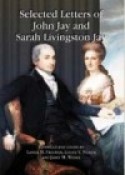
The letter appears in Selected Letters of John Jay and Sarah Livingston Jay, compiled and edited by Landa M. Freeman, Louise V. North and Janet M. Wedge, (Jefferson, N.C.: Mcfarland & Co, 2005), page 123. The Illustration of the robe à l’Anglaise can be found HERE. The Marie Antoinette portrait is by Louise Élisabeth Vigée Le Brun, 1783 taken from Wikepedia.

“where can I hope to find such friends as I parted from”

The last post referred to the friendship between MARY WHITE MORRIS and the sisters Kitty Livingston and SARAH LIVINGSTON JAY. Sarah was one of the few wives who accompanied their husbands on diplomatic missions abroad. She was brave enough to undertake what was very much a dangerous crossing of the Atlantic and emotionally strong enough to leave their young son in the charge of her parents in New Jersey. She missed her friends in America and tried to stay in touch by mail which was unreliable at best. Following is one of a series of letters she wrote to Mary Morris, this one from Madrid where John had been sent to try to secure loans from the Spanish.

[Madrid April 22d 1781]My dear Mrs. Morris,
. . . As Mr. Jay & myself are interested in Mr. Morris’ and your happiness, we were very anxious last fall about both your healths, for we had heard (from France) that they were impaired, & a letter from Kitty some time after was doubly welcome by giving us the pleasing information of the recovery of persons we so much esteem’d, and likewise the re establishment of mama’s & her own health. How amply, my dear madam! does your affection compensate Kitty for the absence of her sister—but where can I hope to find such friends as I parted from in quitting America—not I am sure in the acquaintances of a few months or in the formal birthday visitors—preserve therefore I charge you the regard you honor me with, that in your company when I return, I may forget how long we have been seperated.
I dare say you were pleased with the marriage of Mr. [William] Bingham & Miss [Ann] Willing, as it promises happiness to the parties interested: shall I request you to present to them our congratulations?
Tell Miss Hetty [the oldest Morris daughter, aged seven] if you please that if she thinks she can smile upon a Don, I’ll use my influence to engage a few to accompany us, for we hope to return before she seriously thinks of paying her devoirs to Hymen. Kitty’s accounts of Maria [a Morris daughter aged two] increase my inclination to see her; and I am quite happy that your little sons are likely to answer the expectations form’d of them. . . .
You & Mr. Morris will do us justice in believing that you have not more sincere friends in the numerous circle of those who love & esteem you, than in Mr. Jay and your humble servt.
Sa. Jay
I have often smil’d at the apologies made for Incorrect letters, but none ever requir’d them more than this.

The expression “paying her devoirs to Hymen” refers to courtship and marriage. I would think Hetty was a bit young to be thinking such thoughts—but maybe not. Ann Willing was a Philadelphia socialite regarded as one of the most beautiful women in America. She married the wealthy William Bingham referred to in this post.

The letter is in the Robert Morris Collection, Henry E. Huntington Library. The print of Sarah Livingston Jay is from the Print Collection Portrait File of the New York Public Library.


previous page · next page

   Copyright © 2026 In the Words of Women.