“we celebrated the Anniversary of our Independance”

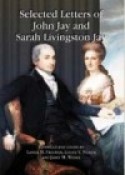
John Jay and his wife Sarah Livingston Jay were in Paris in July of 1783 where John as a Peace Commissioner had been influential in drafting the Preliminary Articles of Peace in 1782 which were awaiting the official signing. Sarah wrote a long letter to her sister Kitty in Elizabeth Town, New Jersey, including a passage describing how they had celebrated the anniversary of the Declaration of Independence.

Passy l6th July 1783
My dr. sister,
On the 4th of July we celebrated the Anniversary of our Independance here at Passey, but the next I hope to celebrate in yr. company, & I’m sure that our pleasure will not be less animated even tho’ we shou’d substitute butter-milk in lieu of champagne to commemorate the illustrious event. I’ll inclose you a copy of the toasts Mr. Jay prepar’d for the occasion. . . . How nearly my dear Kitty! does extreme felicity approach a painful sensation. I’ve more than once experienc’d it; nor were my feelings divested of that kind of sensibility on the 4th of July, for I found it difficult to suppress the tears that where ready to flow to ye memory of those who in struggling to procure that happiness for their country which we were then celebrating had fallen in the glorious attempt. . . .

Because the following toasts Sarah enclosed are in her hand it has been thought that she gave them on the occasion of the signing of the Treaty of Paris. However, upon close reading, it is clear that they are more appropriate for an Independence Day celebration and were most likely given by John Jay on July 4, 1783.

1. The United States of America, may they be perpetual.
2. The Congress.
3. The King & Nation of France.
4. General Washington & the American Army.
5. The United Netherlands & all other free States in the world.
6. His Catholic Majesty & all other Princes & Powers who have manifested
Friendship to America.
7. The Memory of the Patriots who have fallen for their Country. May kindness
be shown to their widows & children.
8. The French Officers & Army who served in America.
9. Gratitude to our Friends & Moderation to our Enemies.
10. May all our Citizens be soldiers, & all our soldiers Citizens.
11. Concord, Wisdom & Firmness to all American Councils.
12. May our Country be always prepared for War, but disposed to Peace.
13. Liberty & Happiness to all Mankind.

posted July 3rd, 2014 by Janet, Comments Off on “we celebrated the Anniversary of our Independance”, CATEGORIES: France, Independence, Paris

“they did not chuse to go to School with a Black Boy”

Abigail Adams in Quincy wrote a newsy letter on February 13, 1797 to her husband describing what was needed to keep their farm going for the spring: plowing, sowing, manuring, additional hands, the renewal of a rental agreement on some property, and the like. She also described what happened when she sent one of their free Negro workers to an evening school.

I have been much diverted with a little occurence which took place a few days since and which serve to shew how little founded in nature the so much boasted principle of Liberty and equality is. Master Heath has opend an Evening School to instruct a Number of Apprentices Lads cyphering at a shilling a week, finding their own wood and candles.

James desired that he might go. I told him to go with my compliments to Master Heath and ask him if he would take him. He did & Master Heath returnd for answer that he would. Accordingly James went. After about a week, Neighbour Faxon came in one Evening and requested to speak to me. His Errant was to inform me that if James went to School, it would break up the School for the other Lads refused to go. Pray Mr. Faxon has the Boy misbehaved? If he has let the Master turn him out of school. O no, there was no complaint of that kind, but they did not chuse to go to School with a Black Boy. And why not object to going to meeting because he does Mr. Faxon? Is there not room enough in the School for him to take his seperate forme? Yes. Did these Lads ever object to James playing for them when at a dance? How can they bear to have a Black in the Room with them there? O it is not I that object, or my Boys. It is some others. Pray who are they? Why did not they come themselves? This Mr. Faxon is attacking the principle of Liberty and equality upon the only Ground upon which it ought to be supported, an equality of Rights. The Boy is a Freeman as much as any of the young Men, and merely because his Face is Black, is he to be denied instruction? How is he to be qualified to procure a livelihood? Is this the Christian principle of doing to others, as we would have others do to us? O Mam, you are quite right. I hope you wont take any offence. None at all Mr. Faxon, only be so good as to send the young men to me. I think I can convince them that they are wrong. I have not thought it any disgrace to my self to take him into my parlour and teach him both to read & write. Tell them Mr. Faxon that I hope we shall all go to Heaven together. Upon which Faxon laugh’d, and thus ended the conversation. I have not heard any more upon the subject. I have sent Prince constantly to the Town School for some time, and have heard no objection.

“Letter from Abigail Adams to John Adams, 13 February 1797 [electronic edition]. Adams Family Papers: An Electronic Archive. Massachusetts Historical Society, HERE.

posted June 30th, 2014 by Janet, Comments Off on “they did not chuse to go to School with a Black Boy”, CATEGORIES: Adams, Abigail, Education, Free blacks

“My unworthy Husband”

I came across the following ad in the Providence Gazette of May 5, 1802. I have seen advertisements offering rewards for information about runaway slaves and ads by husbands disclaiming responsibility for debts incurred by wives who had been unfaithful or left, but I had not seen any in which a wife responds to what purports to be character defamation by detailing what she endured at the hands of her husband that prompted her to leave him. Interesting that she felt the need to go public. I wonder what the resolution of this affair was.

posted June 26th, 2014 by Janet, Comments Off on “My unworthy Husband”, CATEGORIES: Marriage

“I have stood long in the vineyard”

One of the last letters Mercy Otis Warren wrote to Sarah Cary follows. (See previous post here.) In it she contemplates her death and counts her life’s blessings:

February 7th 1802 This day counts up to twelve months since I have been able to read a page or take up my pen. You who can contemplate the wisdom and goodness of divine dispensation, who have health and vigour both of body and mind, cannot be indisposed to write and haste to strengthen the mental views of a friend, whose outworks are weakened and corporeal sight darkened. But you have cares, lovely cares, a family who I hope promises to reward every attention that occupies the time of so good a mother. I, too, have had the important charge committed to me, of educating youth of the best disposition, and regret that it has not been executed in a more perfect manner, yet hope I have not lived in vain.

I have stood long in the vineyard and seen many, many indeed, drop around me younger than myself and perhaps better qualified for useful labour. You my dear, Mrs. Cary are almost the only female friend I have left, to whom I can without restraint pour out the flow of thoughts as they arrive, amidst the chequered hue of my span of life. But the first friend of my heart still lives, and enjoys as much health and happiness, as any one who has seen such a variety of change, who has consigned to the grave three dutiful and amiable sons, as accomplished friends in the zenith of usefulness & capacity that fed the fondest hopes of the parent. I will be silent on the theme,—and consider, the sovereign Lord of all who lent, “has took but what he gave.”

I have two sons yet left to smooth the pillow of age, who I hope will be spared to fill up a useful life, after they have closed the eyes of their affectionate parents.

Tell me in your next if there is not a probability, if we should both stand a year or two longer, that we may have another interview before we mix with our departed friends and innumerable rational existences, inhabitants of worlds unknown. I hope you do not think I write in a gloomy style. I do not feel as if I did. I tread down the remnant of life with a tolerable degree of chearfulness—my days are tranquil, my nights not wearisome: I wake in the morning with a mind [filled?] with gratitude that it is as well with me as it is.

Richards, Jeffrey H. and Sharon M. Harris, eds., Mercy Otis Warren Selected Letters (Athens, Georgia: University of Georgia Press, 2009), ONLINE, page 250.

posted June 23rd, 2014 by Janet, Comments Off on “I have stood long in the vineyard”, CATEGORIES: Children, Friendship, Warren, Mercy Otis

“No my dear Mrs Cary I have not forgotten you”

After reading three of Sarah Cary’s letters to her son Samuel here, here, and here, it’s time you learned something more about this interesting woman.

In 1791, Sarah and her husband Samuel returned to Chelsea, Massachusetts, from Grenada after a stay of almost ten years supervising a sugar plantation. While in the West Indies Sarah had borne, in addition to Samuel, Jr., ten more children, two of whom died in infancy. When the family took up residence in Chelsea, Samuel made substantial improvements to the house and property. And Sarah had four more children! During an insurrection on Grenada in 1795, the Cary plantation burned to the ground, a severe loss which caused financial difficulties for the family in the following years.

One feature of the last two decades of Sarah Cary’s life—she died in 1825—was her relationship with Mercy Otis Warren. Warren was several years her senior yet resumed a correspondence with her, after a period of twenty years, when Sarah returned to Massachusetts. (They were connected by family ties—Sarah’s cousin married Mercy Otis Warren’s brother.) She begins her letter of June 24, 1793, with these words. “No my dear Mrs Cary I have not forgotten you. I am not one of those who ever forget their friends.” She continues in a letter of June 8, 1799:

I again resume the pen to speak to my dear friend once more on this side the grave. I have stood on its marge: indeed at my time of life every one stands there, yet how hard to realize this truth.

. . . [F]ew things in this world would give me equal pleasure as an interview with my dear Mrs Cary. If this ever takes place it must be at my own house for I have no Idea that I shall ever again go many miles from home. Come on my dear Sally. Leave the cares of Domestic education for a short time: and spend a few days with perhaps as affectionate a friend as any one you have on this side of eternity out of your own little family circle.

Warren wrote again to Cary from Plymouth on August 18th, 1799. Shaking off her melancholy mood, the result of the death of one of her sons, and ruminations on (to her mind) the sorry state of political affairs, she returns to the main purpose of her letter: to reply to Cary’s inquiry after the state of her health.

Yesterday my dear friend I received yours dated July 13th. This like all I receive from Mrs Cary is replete with that tender interest that marks the mind of true friendship.

I will tell you in a few words some days I feel as if I could ride half way to Chelsey. Others weak and debilitated but not so but that I can think converse with my friends present and long to see the absent. If we meet again in this world I believe it must be in my residence at Plimouth.

I see by the public papers that your house has been struck by a flash of lightening by which a person therin received the summons of Death. Tis to most people would be an alarming shock, but I doubt not your calm mind was as usual unruffled. I have been repeatedly asked if your house was pointed.* I am not able to say. . . .

* Warren is asking whether Cary’s house had a lightning rod.

More about the correspondence between the two women in the next post.

Richards, Jeffrey H. and Sharon M. Harris, eds., Mercy Otis Warren Selected Letters (Athens, Georgia: University of Georgia Press, 2009), ONLINE, pages 239, 245-248.

posted June 19th, 2014 by Janet, Comments Off on “No my dear Mrs Cary I have not forgotten you”, CATEGORIES: Cary, Sarah, Death, Friendship, Warren, Mercy Otis

previous page · next page

   Copyright © 2026 In the Words of Women.